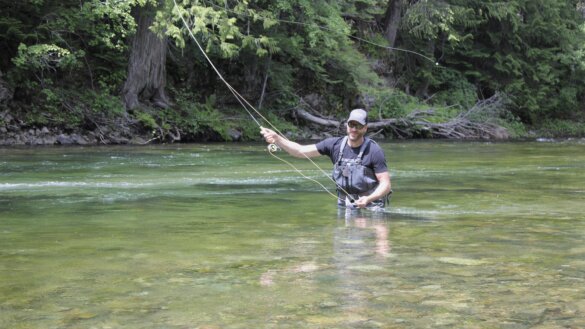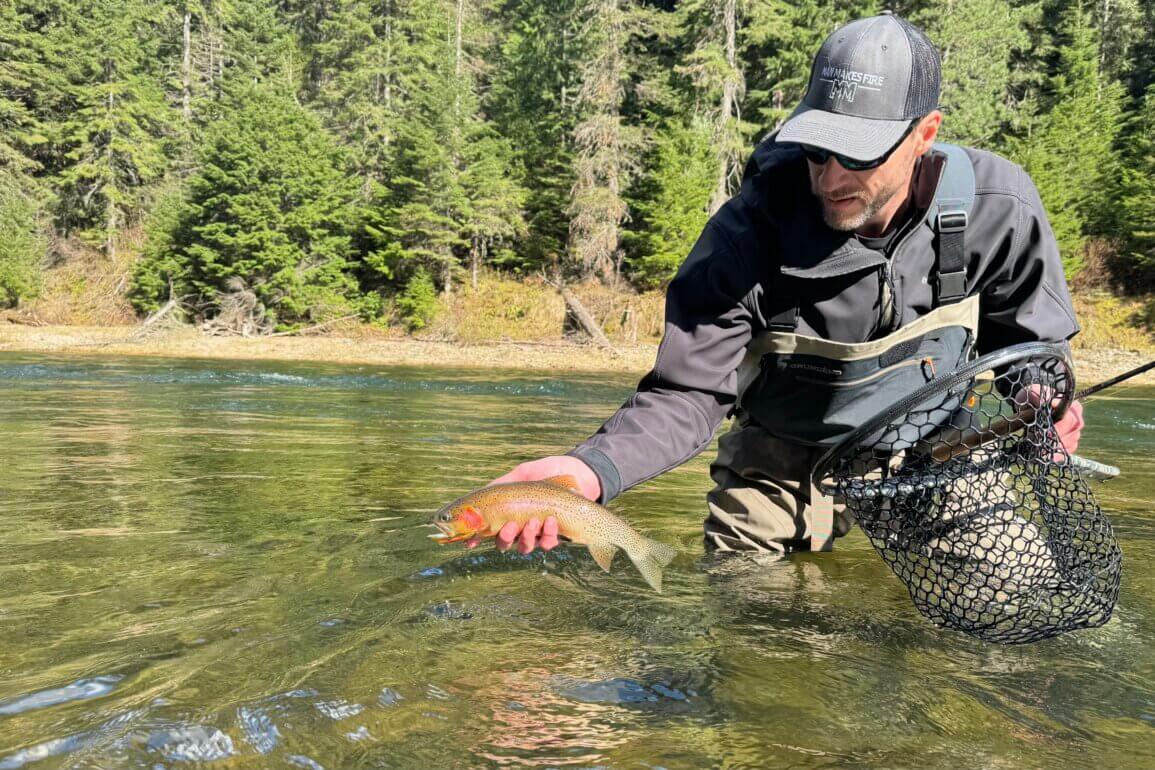
Grippy, supportive wading boots give you sure footing that lets you venture out into a river, stream, or lake to get closer to the fish without slipping and falling. I’ve been wearing and testing wading boots while fishing on my home waters in Idaho for decades. These are the boots I appreciate most and recommend.
After testing dozens of wading boots, I find myself appreciating many options for different fishing situations. Still, the Korkers Devil’s Canyon is the best overall wading boot for most people. It’s insanely comfortable, surprisingly durable, and the OmniTrax interchangeable sole system lets me choose the sole I need for any situation.
The best budget wading boot is the White River Fly Shop Riseform Lug Sole Wading Boots. While other wading boot prices keep rising faster than trout hammering hoppers, these Bass Pro Shops/Cabela’s house brand boots are my favorite under $100. If you’re a fan of ultralight and agile boots for covering rugged ground, my all-time favorite lightweight wading boot is the Patagonia Forra. These handsome Italian-made options fit like a dream and feel like a trim hiking boot.
Every fisherman has a favorite go-to waterway they fish most, and mine is the St. Joe River in Idaho. It’s a native cutthroat trout fishery that is packed full of slippery rocks and challenging wading conditions. Like many lifelong anglers, I’ve also ventured father afield while testing wading boots, for instance, dropping down to the Owyhee River in Oregon to stalk monster brown trout, oaring my raft 100 miles down the Middle Fork of the Salmon River, or flying in to the Uganik River in Kodiak, Alaska to chase coho salmon fresh from the sea. In addition to my personal experience, I incorporate feedback from Man Makes Fire gear testers, advisors, fishing buddies and fellow fishers I encounter out on the water.
10 Best Wading Boots Quick List
- Best Overall Wading Boot: Korkers Devil’s Canyon
↓ Jump to Review - Best Wading Boot Under $100: White River Fly Shop Riseform Wading Boots
↓ Jump to Review - Best Lightweight Wading Boot: Patagonia Forra
↓ Jump to Review - Best for Beginner Wading Boot: Orvis Clearwater
↓ Jump to Review - Most Versatile Traction on a Budget: Korkers Greenback
↓ Jump to Review - Most Durable Wading Boot: Simms G3 Guide Wading Boots
↓ Jump to Review - Best Hybrid Traction: Orvis Pro Hybrid Wading Boots
↓ Jump to Review - Best Wading Boot for Hiking: Simms Access Wading Boot
↓ Jump to Review - Best Ankle Support: Korkers River Ops
↓ Jump to Review - Best Saltwater Wading Boot: Simms Freesalt Boot
↓ Jump to Review
10 Best Wading Boots
The best wading boots are dominated by several key fishing gear manufacturing brands: Simms Fishing, Orvis, Korkers, Patagonia, and Grunden’s. These brands all make and constantly update multiple styles of wading boots, but the ones we’ve highlighted are our favorites.
Best Overall Wading Boot
Pros:
- Interchangeable soles
- Comfortable & agile
- Durable
- Excellent value
Cons:
- Fits large (some can size down)
- Flexy ankle support
Weight: 58 oz per pair
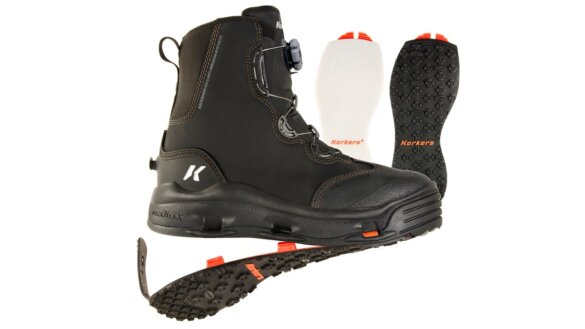
Bottom line: The Korkers Devil’s Canyon is the best all-around wading boot for most people. It has a flexible and comfortable fit with a stable, supportive base. Durability is very good, and the OmniTrax Interchangeable Sole system lets you choose felt or rubber (with studded options) to get the best traction for conditions or regulations.
Why I like it: I was originally skeptical of the Korkers Devil’s Canyon, but the blend of agility and support won me over. When I snug the easy-to-use BOA lacing system, I like how the sides give me reasonable ankle support without feeling like I’m stuck in a ski boot. I’m also impressed with the competitive pricing. When I consider the near seamless upper with protected, dual-stitching, these boots have fewer points of failure than many others I’ve tested. I’ve worn these boots well over 100 river miles, over rough terrain, using them on dozens of fishing trips, and they’re holding up well. They are one of my all-time favorites.
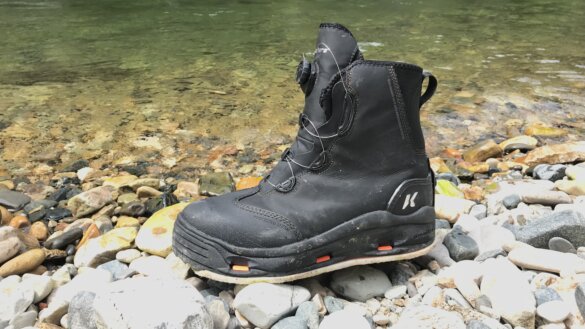
The streamlined upper of the Korkers Devil’s Canyon easily fends off sticks and sharp rocks while fishing. 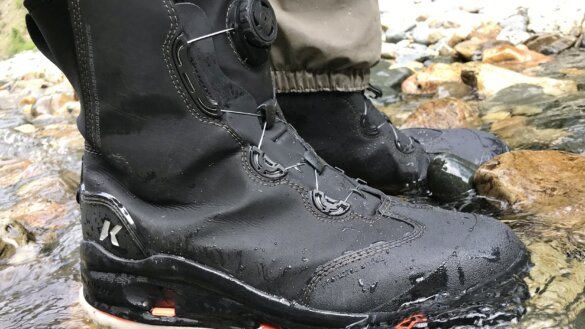
The BOA lacing system is fast, snugs uniformly across the upper, and hasn’t let me down once after multiple seasons of use. 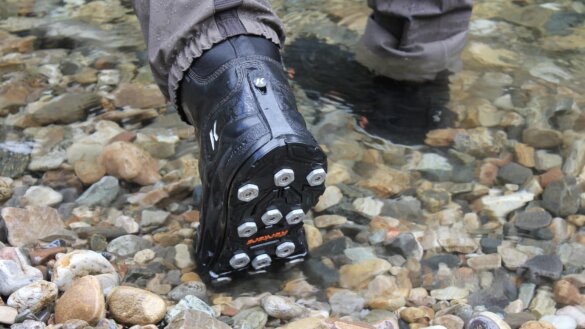
The OmniTrax Interchangeable Sole System lets you install several different kinds of soles for the best traction for your fishing situation. 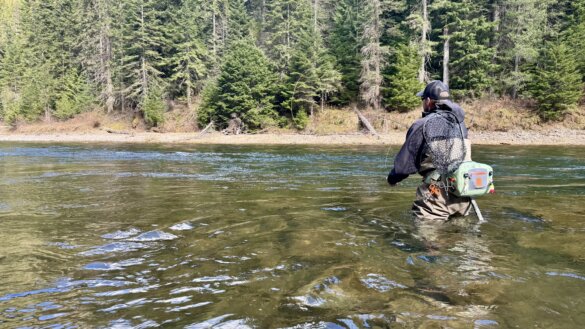
Great wading boots help you get into positions to catch more fish! 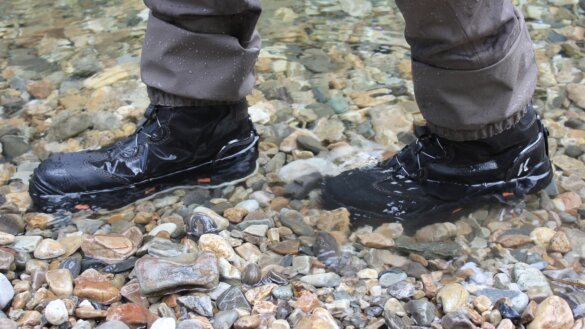
The Korkers changeable sole system makes it easy to test different kinds of soles side-by-side when evaluating traction characteristics.
Who’s it best for? The Devil’s Canyon is great for those who fish different watersheds each year because you can choose which sole to use. If you live in or visit a state that has a felt sole ban, you can use the included rubber sole. If you need extra traction, Korkers offers a bunch of different studded rubber sole patterns that can rival the stickiness of felt on slippery wet rocks, but you can also choose the Kling-On & Studded Cling-On sole option if you don’t need felt.
Fit and sizing recommendation: Korkers recommends choosing one size up compared to your usual street shoe, i.e. if you wear a size 11, order a size 12 in the Devil’s Canyon. However, in my experience, they fit a bit large and roomy over typical stockingfoot waders and you might be able to size down (particularly if you are a half size).
Great alternatives: If you like the interchangeable soles but want heavy-duty ankle support, go with the Korkers River Ops. Choose the Greenback if you’re on a tight budget. If you want felt but don’t want to give up dry approach traction, we’ve been impressed with the Orvis Pro Hybrid felt/rubber sole.
Read more: Korkers Devil’s Canyon Review: Long-Term Update
Best Wading Boot Under $100
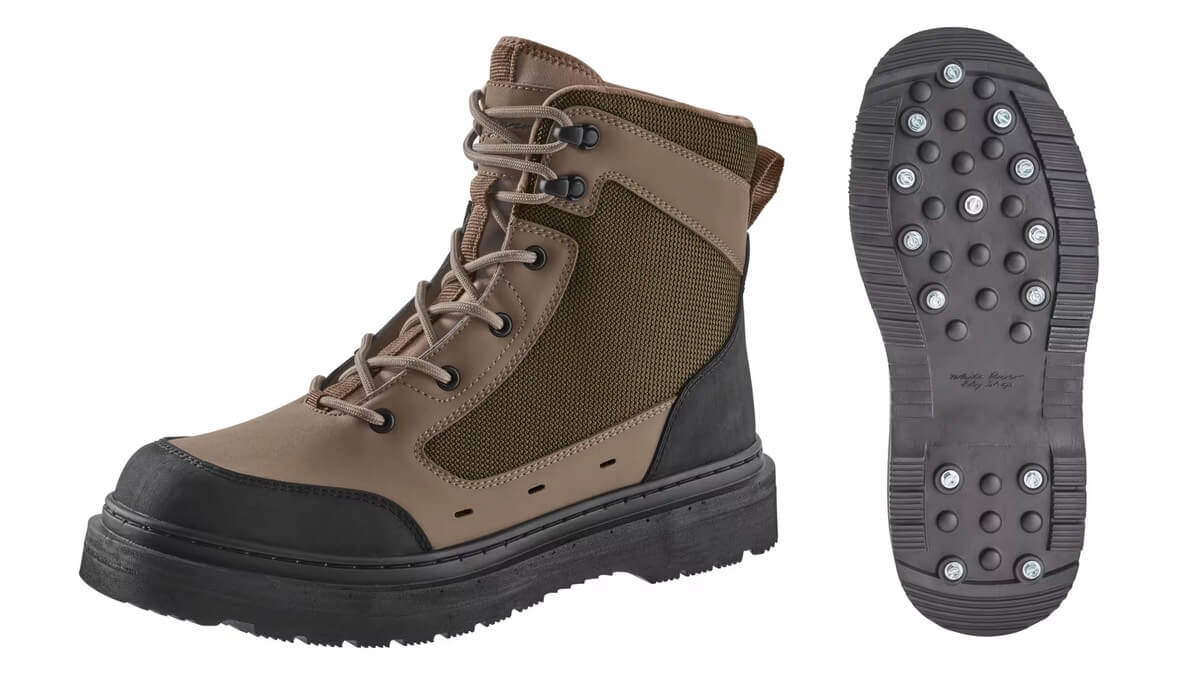
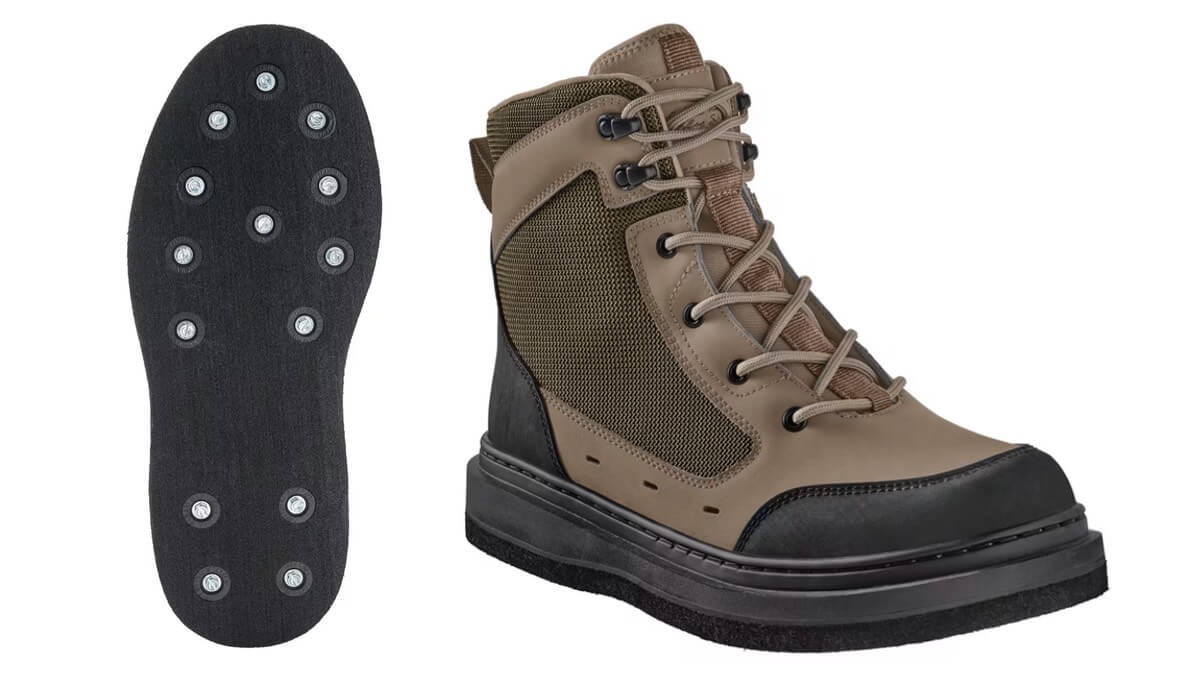
White River Fly Shop Riseform Wading Boots
Pros:
- Budget-friendly pricing
- Studs included
- Copper eyelets
Cons:
- Not the most nimble
- Not the best for long-term durability compared to more expensive options
Weight: 64 oz per pair
Bottom line: The White River Fly Shop Riseform Wading Boots are the best wading boots under $100, and they’re available in a rubber or felt sole option. Despite rising prices for most outdoor gear, Cabela’s and Bass Pro Shops have done a great job of committing to a quality wading boot that costs less than $100.
Why I like it: White River Fly Shop is a house brand for Bass Pro Shops and Cabela’s, and it consistently produces gear that outperforms its affordable price points. These don’t compete with options that cost twice as much, but for the price, the overall value is excellent. Many cheap boots use single row stitching, so I’m happy to the see the double-row stitching in the upper. The threads will eventually wear if you walk through rugged terrain, but it’s a great start.
I also appreciate the non-corrosive copper eyelets verses nylon loops that can prematurely wear out (small bits of sand won’t grind them apart). Better yet, I love that Cabela’s and BPS include hardened-steel cleats instead of charge extra for them.
Who’s it best for? The basic Riseform Wading Boots are perfect for beginners on a budget or for casual fishing. If you wade more than a dozen or so times each year, an upgrade might turn into a better long-term value though.
Fit and sizing recommendation: Order your regular street shoe size if you plan to wear these with typical stockingfoot waders. Size up if you’re a half size.
Great alternatives: The Frogg Toggs Hellbender is another decent sub-$100 option, just make sure you buy it from a reputable seller, like Amazon directly vs a less trustworthy seller. If you’re willing to stretch your budget to around $130~ you can nab the Korkers Greenback with a felt sole, or better yet, spend $20 more to get both a felt sole and a rubber sole.
Best Lightweight Wading Boot
Pros:
- Feels remarkably agile
- Stellar on-ground traction
- Outstanding anatomical fit
- Surprisingly durable
Cons:
- No felt option (rubber sole only)
- Optional stud kit costs extra
- Sometimes they sell out
Weight: 41 oz per pair
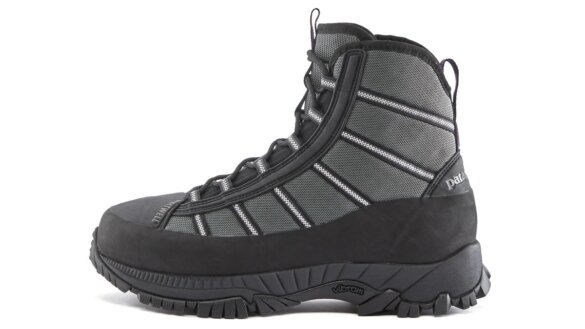
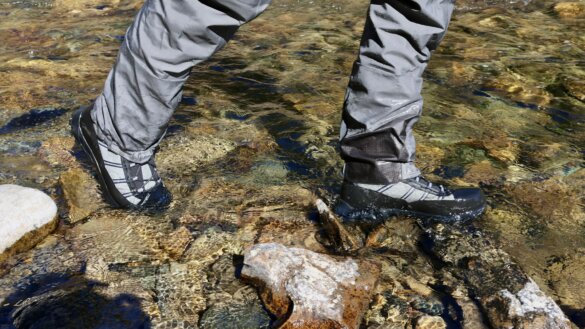
Bottom line: The Patagonia Forra Wading Boots are the best lightweight wading boots for most fishing situations. They absolutely excel for long hikes to secret fishing holes. During testing on the steep banks of the St. Joe River, they hugged my foot, resulting in an agile, trim feel that let me scramble over logs and boulders with ease.
Why I like it: The Forra is made in Italy by Fitwell for Patagonia, and oh boy, they fit and feel fantastic. As you might expect from an Italian-made boot, the overall quality is excellent. At about 1.3 pounds per boot, they’re super light but surprisingly stable. The rugged rubber Vibram Mars sole has lots of angled lugs for traction on multiple surfaces and slopes. They’re particularly nimble and great for steep banks and rock-hopping.
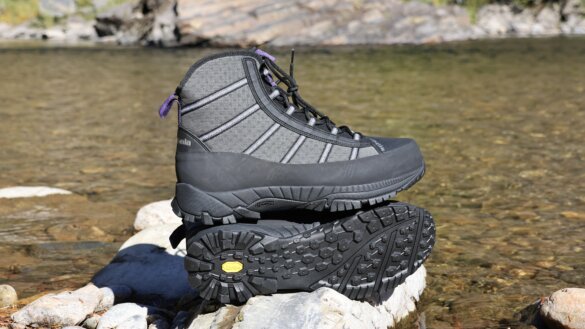
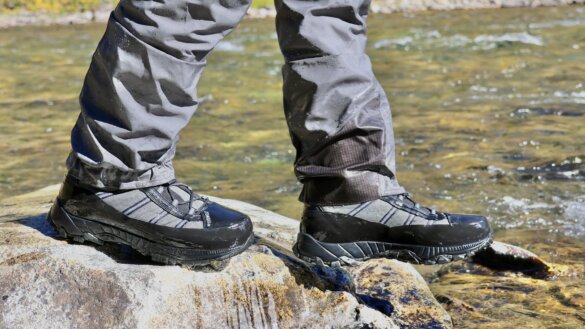
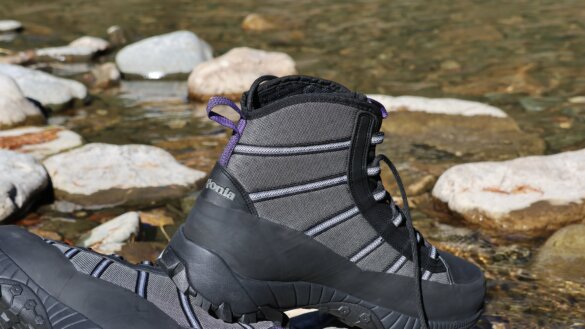
Because the Forra boots have a trimmer fit, they don’t fill up with excess water. This keeps them feeling light and agile on my feet, even when I first step out of the water. In addition, the well-designed upper doesn’t have thick, excess padding or layers, so they dry more quickly than most boots.
The biggest drawback is that the in-water wet traction on slick and slimy round rocks in cold Idaho streams is about average for rubber-based soles. Sorry. They’re not magic on slimy rocks. However, if you plan swift-water wading or wade in areas with particularly slick rocks, you can order a Grip Studs Traction Kit.
Who is it best for? Patagonia designed the Forra for fishers who cover a lot of ground getting to streams and lakes, as well as for those who wade long distances in and along riverbanks and shorelines. I also think they’re particularly good for fishermen who are tired of burly, cavernous boots that feel unbearably heavy at the end of long days. The Forra is the antidote. At the end of full days of fishing, my feet feel fresh and ready to go.
Fit and sizing recommendation: Choose one size up from your regular street shoe size when wearing with typical stockingfoot waders, i.e. if you wear a size 11 shoe, choose a size 12 Forra.
Great alternatives: The Simms Access Wading Boots are a few ounces heavier, but they feature a cushiony EVA midsole that’s designed to absorb shock. The Simms Flyweight Boot Felt option is one of the few lightweight boots with felt soles. We also really appreciate the lower mid-height ankle on the Orvis PRO LT, which can improve ankle mobility for a more nimble feel. The Korkers Stealth Sneaker weighs in at just 34 freaking ounces per pair, plus they’re incredibly flexible — but they lack the Korkers interchangeable sole system.
Read more: Patagonia Forra Wading Boots Review: Lightweight Comfort!
Best for Beginners
Pros:
- Durable eyelets with streamlined construction
- Accommodating, roomy fit
- Large rubber toe rand fends off scuffs
- Two sole options
Cons:
- Screw in studs cost extra
- Bit rigid
- Long-term durability not as good at premium options
Weight: 50 oz per pair
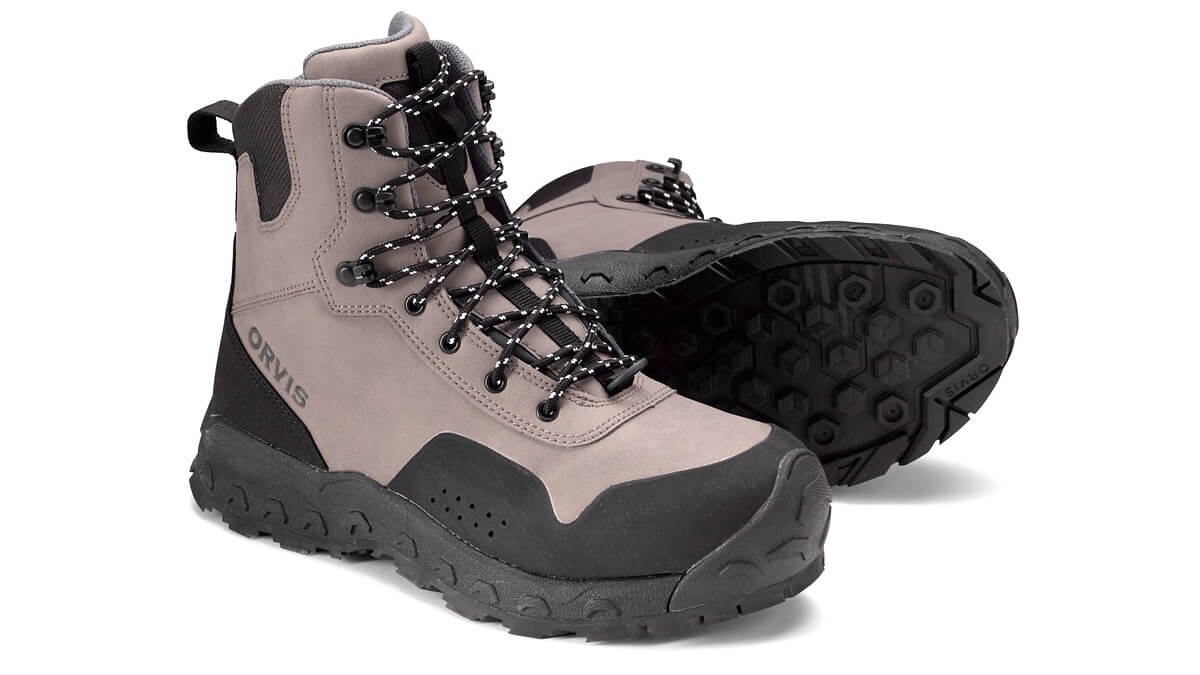
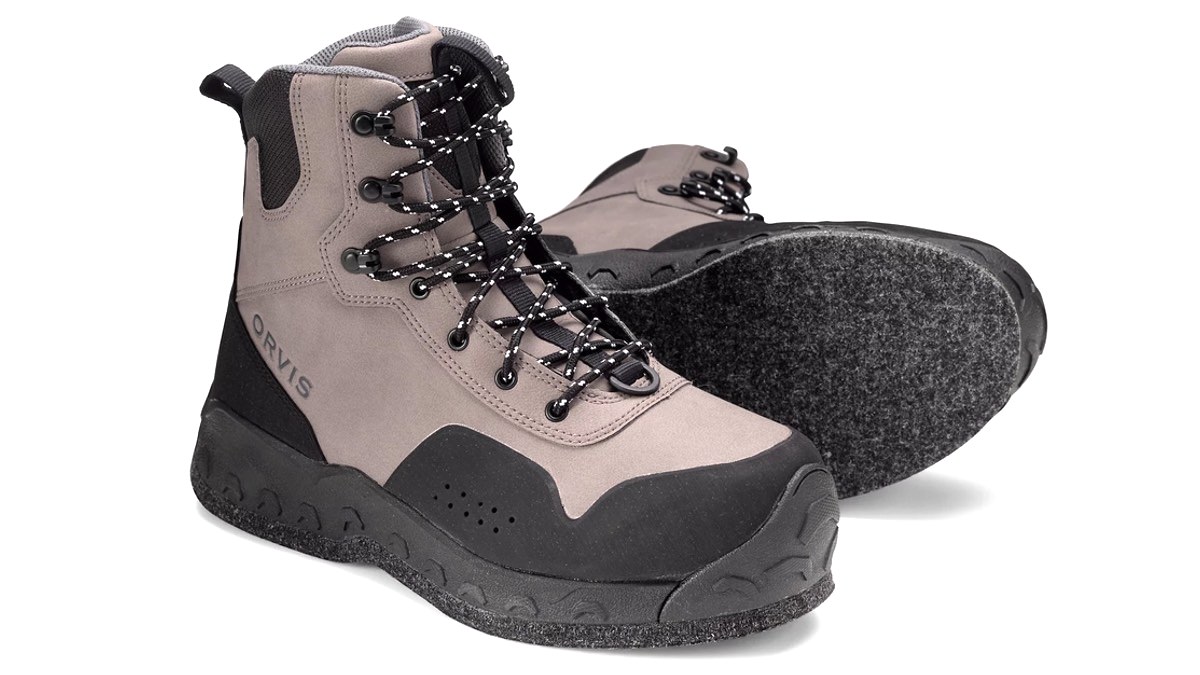
Bottom line: The Orvis Clearwater is the best wading boot for beginners because it has an excellent blend of streamlined durability, ankle support, and an accommodating fit. The price point is fair, making these boots a step up from most entry-level options.
Why I like it: The Clearwater is simply a well-made basic wading boot that gets the job done. I like the extra-coverage rubber toe bumper and the rubber rand around the forefoot and heal. The forefoot doesn’t have any stitching, and in my experience, this design resists the seam fraying that occurs after I constantly walk through brush, crunch through piles of driftwood, and scrape against sharp rocks as I skid down steep river banks. I’m also a fan of the felt option for its superior traction on slick and slimy underwater rocks.
Who is it best for? The Clearwater is great for beginners on a budget who want a longer-lasting option but aren’t ready to spend more on a premium competitor. They’re also great for those with high-volume or wider feet.
Fit and sizing recommendation: Choose one size up from your regular street shoe size when wearing with typical stockingfoot waders, i.e. if you wear a size 11 shoe, choose a size 12 Clearwater. Editor’s Note: The Clearwater is the only wading boot Orvis offers in a size 15, which fits men who wear size 14 street shoes.
Great alternatives: The Simms Freestone Wading Boot, which is also available in a rubber or felt sole option, is the Simms-brand Clearwater equivalent. They’re quite sturdy, very rugged, but cost a bit more.
Most Versatile Traction on a Budget
Pros:
- Same awesome interchangeable OmniTrax sole system that’s on premium Korkers boots
- Flexible, comfortable fit
- Lightweight
- Versatile traction options
Cons:
- Not as durable as premium options
- Nylon lace eyelets can wear faster in very sandy environments
- Ankle support might be too flexible for some
Weight: 40 oz per pair with felt soles
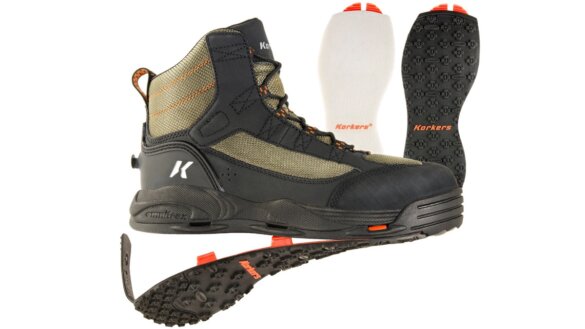
Bottom line: The Korkers Greenback is the most affordable wading boot option for those who want to wear different soles for different fishing conditions or regulations. For example, you could use a felt sole for safe wade fishing in one state and then switch to a rubber sole if you travel to fish in a state that has banned felt soles.
Why I like it: I’m a big fan of the Korkers Omnitrax Interchangeable Sole System. In my experience, the soles have stayed put, giving me sure footing while fishing rivers and lakes in Idaho, Oregon, and Washington. Studded rubber soles are great for traction on slick underwater rocks, but they’re not good for walking on riverside fly shop floors . . . and they’re definitely a no-go for when I want to fish from my rubber raft. I like how I can swap out the sole to match my environment.
Who is it best for: The Korker Greenback is best for budget-minded beginners who fish in areas that have banned felt soles but still want options for different fishing conditions or regulatory environments. Simply being able to switch from a studded rubber sole to a fully rubber sole can be very useful when wading swift rivers or fishing from boats.
Fit and sizing recommendation: Choose one size up from your normal street shoe size, i.e. if you wear a size 10 US mens, choose a size 11 Greenback when wearing with typical stockingfoot waders.
Great alternatives: If you like the OmniTrax Sole System, check out the more durable Korkers Devil’s Canyon, which are also quite comfortable. If you need extra ankle support, go with the burly Korkers River Ops.
Most Durable Wading Boot


Pros:
- Rugged abrasion-resistant materials
- Re-soling available from Simms
- Available in rubber or felt sole options
Cons:
- Expensive
- Not particularly nimble
- Heavy
Weight: 78 ounces per pair
Bottom line: Durability is the single most contentious factor when it comes to evaluating wading boots, and while experts can argue over their favorite option, the Simms G3 Guide is our top recommendation. While other manufacturers also make awesome boots, only Simms is able to re-sole the boot if you wear out your soles.
Why I like it: Simms has offered previous versions of its “G3 Guide” for many years. Its latest update came in 2025, which changed it more to a work-boot sort of style. I like the stability inherent in this style of boot, and it also makes it possible to re-sole the boot at about 1/3 the cost of new.
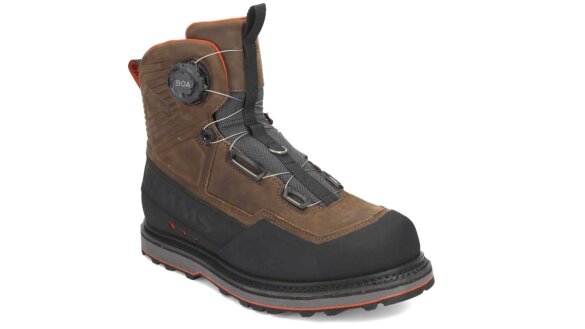
Who is it best for: Simms markets this boot to guides and those heading out on serious fishing expeditions who can’t afford to have a gear failure far from home. I think these are best for those who prioritize a rugged stable build that will last for hundreds of days in and out of the water. However, it’s a bit heavy and clunky, so it’s not the best for anglers who prioritize nimbleness and agility.
Fit and sizing recommendation: Size up one size from your normal street shoe size when wearing typical stockingfoot waders, but half-sizes can likely just go up to the next full size. If you’re an 11.5 US men’s street shoe, a 12 in the G3 Guide should work.
Great alternatives: The Korkers River Ops is built like a tank and offers interchangeable soles rather than a re-soling option. The interchangeable sole system could be a possible point of failure in extreme environments, but I’ve never had the system fail on me personally. The Grundens Bankside Wading Boot is also remarkably rugged and durable, and it costs about $50~ less but isn’t available in a felt option.
Best Hybrid Traction
Pros:
- Excellent traction blend
- Lightweight
- Durable
Cons:
- Sizing stops at a 13 mens street shoe equivalent (not for those with larger feet)
- Some users report sole separation
Weight: 50 oz per pair
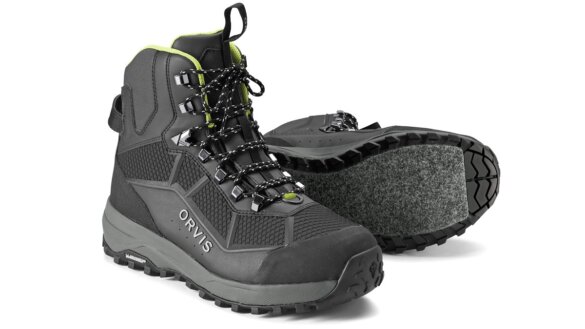
Bottom line: The rubber perimeter lugs on the Orvis PRO Hybrid Wading Boots give you the best of both worlds, rubber for dry land traction and felt for underwater grip.
Why I like it: While I love felt for its underwater traction, it’s not the best for steep, dry ground, which can also wear it down quickly. One of my fishing buddies absolutely loves the Orvis PRO Hybrid Wading Boots for just this reason. He’s the kind of guy who bails off the steepest, nastiest slopes without fear, and he’s pushed these hard without any failures, both in and out of the water. They have one of the most versatile sole combinations available today.
Note: Unfortunately, Orvis doesn’t manufacture the PRO Hybrid to fit a guy who wears a size 14 street shoe, so this is a boot only for guys who have size 13 feet and smaller.
Who is it best for: The combination of interior felt for underwater grip with rugged Michelin Outdoor Extreme lugs on the outer perimeter make this a great do-it-all boot. As long as you’re not fishing in a watershed area that has banned felt soles, these boots are great for those need underwater traction but also grip on steep banks. They’re also great for those who fish from boats and don’t want to damage the decks with studs.
Great alternative options: The Korkers Devil’s Canyon offers interchangeable soles but is not a true hybrid option.
Best Wading Boot for Hiking
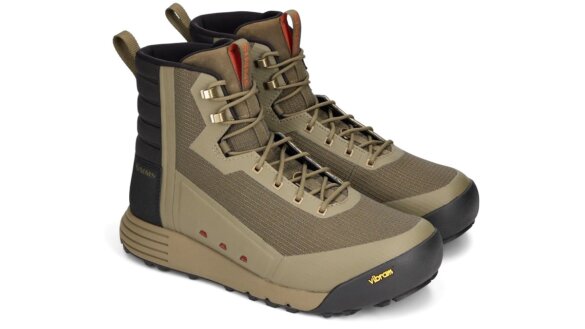
Pros:
- Dual-compound Vibram outsole blends soft interior for wet traction with hard perimeter for dry traction/durability
- Cushiony EVA midsole for comfort
- Lightweight
Cons:
- Limited sizing stops at 14, which is for men with size 13 street shoe feet
Weight: 45 oz per pair
Bottom line: Simms pioneered the trail-to-river mindset with its Flyweight series years ago, but the Access Wading Boot takes hiking comfort to a new level. The dual-compound Vibram sole blends a soft interior rubber for improved wet traction while the perimeter is harder so it doesn’t wear out too fast.
Why I like it: Most wading boots lack well-cushioned midsoles, but the Access uses a thick and cushy EVA foam midsole for comfort on the go. I also appreciate the large ankle and tongue finger loops for fast easy-on access.
Who is it best for? If you prioritize a comfortable ride that feels great when you need to pound out the miles on the way to your favorite fishing hole, the Access is a great choice. The rubber sole isn’t as grippy as felt on slick wet rocks, despite what Simms implies, but it’s a good option for fishing waters that have felt sole bans.
Fit and sizing recommendations: Size up one size from your normal street shoe size when fishing with typical stockingfoot waders.
Great alternative options: The Orvis PRO Hybrid uses a dual-material sole with felt on the interior and harder rubber around the perimeter. It has better underwater grip but it’s not as flexy overall. The Korkers Greenback is a much less expensive alternative. It doesn’t have hybrid soles, but it does have interchangeable soles, making it possible to hike with a rubber sole and fish with a felt sole.
Best Ankle Support
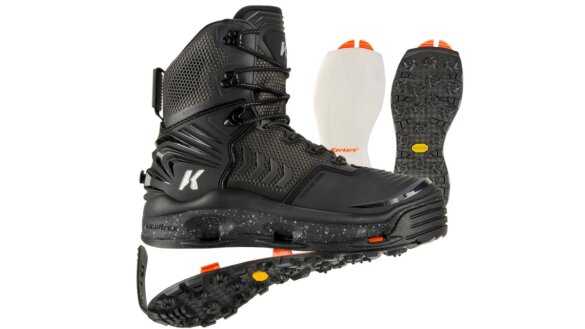
Pros:
- Outstanding ankle support
- No exposed stitching for durability
- OmniTrax Interchangeable Sole System
Cons:
- Bit bulky
- Overkill if you don’t need extra ankle support
Weight: 54 oz per pair
Bottom line: The Korkers River Ops are the best wading boot for those who need increased ankle support and stability. They feature a tall ankle height, a protective outer, pleasant interior cushioning, and an ultra-stable heel design.
Why I like it: I have relatively strong ankles (so far) so I tend to prefer shorter, more flexible boots. However, these bad boys are tall with a robust lacing system. Better yet, the interior uses internal foam padding to increase support and comfort when you tighten the laces. But wait, there’s more: The exterior of the heel cup is shaped to hold your heel in place, reducing foot slipping and increasing stability. All of my favorite, most stable boots share designs that have well-shaped heel pockets.
Who is it best for? The Korkers River Ops is a great choice for anyone who needs serious ankle support with a wide, stable footbed. The interchangeable soles are a bonus, of course.
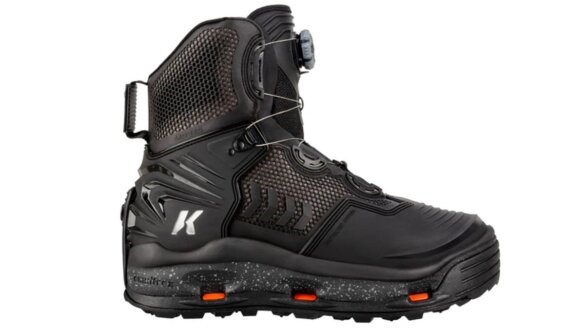
Great alternatives: The River Ops BOA costs about $30 more, but the BOA lacing system is super easy to use and makes lacing and unlacing these tall wading boots a breeze.
Best Saltwater Wading Boot
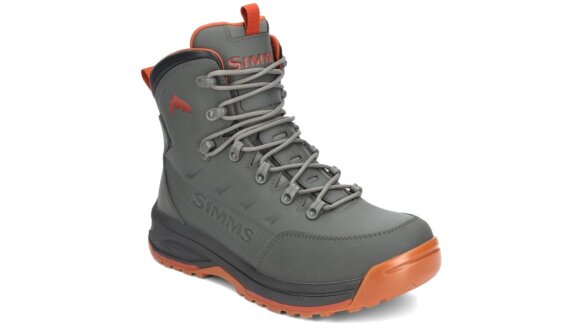
Pros:
- Made with non-corrosive materials to resist saltwater
- Rugged, classic design
- Non-marking sole
Cons:
- Bulky
Weight: 55 oz per pair
Bottom line: The Simms Freesalt is the best traditional, rugged wading boot for scrambling around and wading in coastal environments. It’s made with non-corrosive materials and a non-marking boat-friendly gum rubber sole.
Why I like it: Unlike saltwater wading boots aimed primarily at warm-water flats fishing, this burly boot is made to be worn with waders, making it good for tackling cold-water fishing. Of course, they’re great for fishing the flats, too, especially if you’re the kind of guy who covers a lot of ground and fishes frequently.
Who is it best for: If you’re looking for a corrosion-free wading boot that has a large, accommodating interior that feels like a regular wading boot, these are for you.
Size and fit recommendation: Like most Simms wading boots, choose one size up from your usual US men’s street shoe size.
Great alternatives: The new for 2026 Patagonia River Salt Wading Boots II are now Italian-made by Fitwell for Patagonia, practically ensuring a great fit with excellent quality for most feet. There’s no metal to corrode from harsh saltwater and the non-marking Vibram Megagrip soles are great for boat decks. Where the Simms Freesalt has a more traditional boot construction, the River Salt is aimed squarely for warm water saltwater flat wade fishing environments.
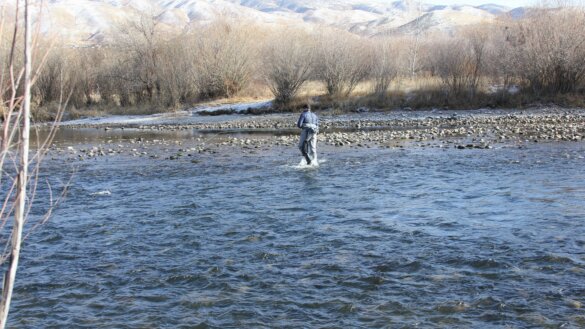
How to Choose Wading Boots: Felt vs Rubber Soles for Fishing
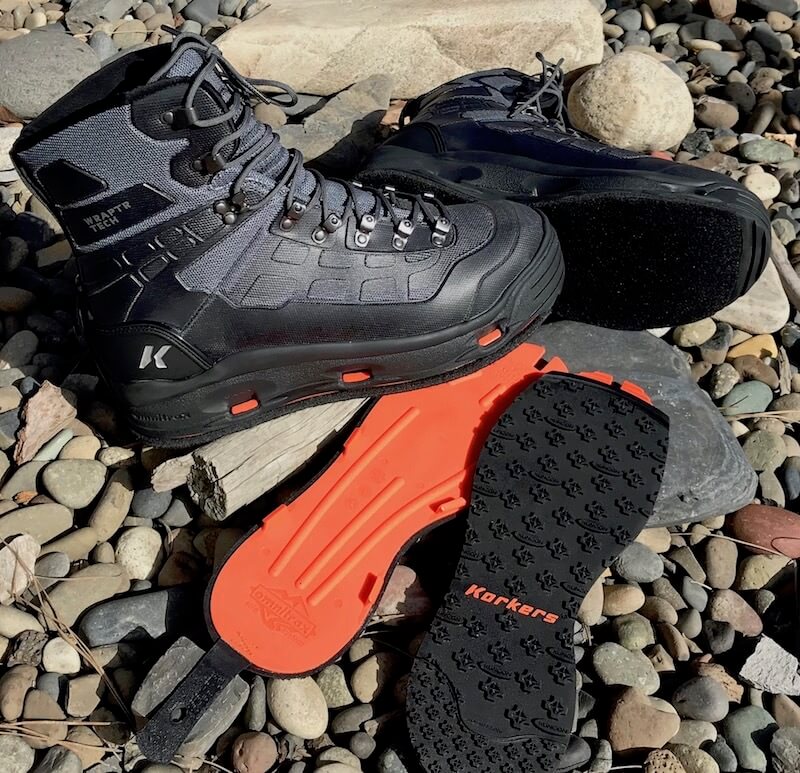
Before you choose a pair of wading boots, you should first consider the question of traditional felt vs rubber soles. If you primarily fish in rivers and lakes in a state that has banned felt soles, your answer is simple: Choose rubber-soled wading boots.
Which states have banned felt soles? Alaska, Maryland, Missouri, Nebraska, Rhode Island, and South Dakota.
Why have these states banned felt soles?
The suspicion is that invasive species can get lodged in the felt sole of your wading boot and hitch a ride from one waterway to another. While possible, the risk is low for most fly fishers, partially because most people don’t get to fish multiple areas in quick succession. Still, if you plan to fish in waters with invasive species problems, choose rubber-soled boots. Of course, bad critters, like the invasive New Zealand Mud Snail, can hitch rides on most any gear. If you’re going to fish problem water, be sure to thoroughly dry all your gear in the sun and/or disinfect it between trips.
On the other hand, felt soles offer superior traction on wet, slick rocks. On dry land? Rubber is usually better. Adding studs to rubber soles greatly increase their grip on slick wet rocks but also makes them very hard on boat decks, a no-go for rubber rafts, and possibly hard on vehicle foot pedals and store floors.
Wading Boot FAQ
The best boots to wear with stockingfoot fishing waders are those designed specifically to be worn with stockingfoot waders. Wading boots are sized larger than regular shoes so you have room for your socks as well as the neoprene stockingfoot bootie on waders. They’re also built to hold up after repeated water exposure over long days of fishing.
Simms, Orvis, Patagonia, Korkers, and more recently, Grundens, are the dominant manufacturers/brands that make the best fly fishing wading boots.
The bottom line is that felt soles offer the best grip on wet, slippery rocks. If you’re wading in gravel or small rocks with gentle shores that have lots of traction, felt soles don’t provide much of an advantage over rubber soles. On a mix of big round and flat rocks covered with slick slime, though, felt soles usually win out when it comes to traction in the water. Aside from being banned in five states and some countries, the disadvantages of felt is that felt soles can wear thin if you spend a lot of time walking on shore or on trails to get to the water.
Rubber soles have come a long way over the last few years. While they aren’t as good as felt for wet wading in most streams, the gap has closed considerably as rubber technologies and tread designs get grippier. In addition, the best rubber-soled options come with metal studs or the ability to screw in studs for extra grip on slimy rocks. The core benefit of rubber soles is that they are much more grippy on the banks and trails around rivers and streams — and they aren’t affected by the aforementioned felt bans. Incidentally, we’re starting to see manufacturers trend toward rubber soles for their newest products, likely due to concern for regulations and possible invasive species issues.
Aside from manufacturing defects, which can happen, each angler wears their wading boots in different, challenging conditions. Those who fish brushy banks will experience frayed threads faster than those fish sandy shores. Frequency of use is a big factor, as is leaving wading boots to cook inside hot vehicles parked in direct summer sun.
Because each fishermen constantly fishes in different situations while also caring for their gear differently, durability experiences can vary. For instance, leaving your boots in a hot car all weekend can wreck havoc on seams and adhesives.
‘Wet wading’ is simply wading in streams and lakes without waterproof waders. Instead of keeping your feet dry inside of waterproof waders, your feet get wet inside of your wading boots or shoes. Lots of fly fishers like to wet wade in rivers and creeks on hot summer days.
There are two good ways to wet wade: The most common way for fly fishing is when you wear your typical wading boots sized to be worn over stockingfoot waders . . . but you wear a thick neoprene sock to maintain a good fit. The second way is to wear a pair of wet wading shoes specifically designed to be worn barefoot or worn with standard socks that will get wet. Sizing is usually based off your usual street shoe size.
Here are a few of the best wet wading shoes:
– Simms Flyweight Access Wet Wading Shoe
– Korkers All Axis Shoe
– Orvis PRO Approach Shoes
Our Gear Review and Tester’s Specific Related Experience:
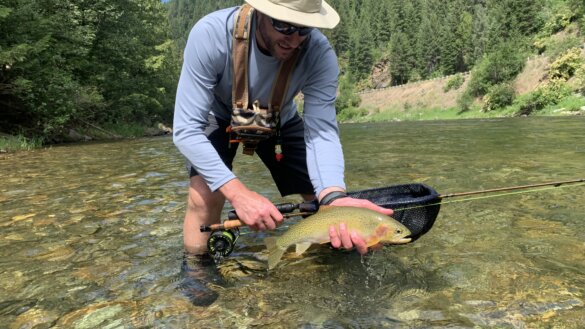
Chris Maxcer has tested and reviewed dozens of wading boots and stockingfoot waders for Man Makes Fire. He’s personally worn and tested wading boots while fly fishing in Idaho, Oregon, Washington, Montana, Colorado, and Alaska for trout, salmon, steelhead, and smallmouth bass. Of course, Maxcer has also written hundreds of in-depth outdoor gear reviews, including independent, first-hand reviews of fly fishing gear, camping gear, hunting gear, backpacking gear, and beach and water play gear, including dozens of in-depth reviews of hiking boots, hiking shoes, and winter boots for Outdoor GearLab. He believes the best way to understand a product is to use it in the real world for the kind of activity it was designed for.
Man Makes Fire publishes independent gear reviews, unencumbered by any requirements from any gear brand or manufacturer.