

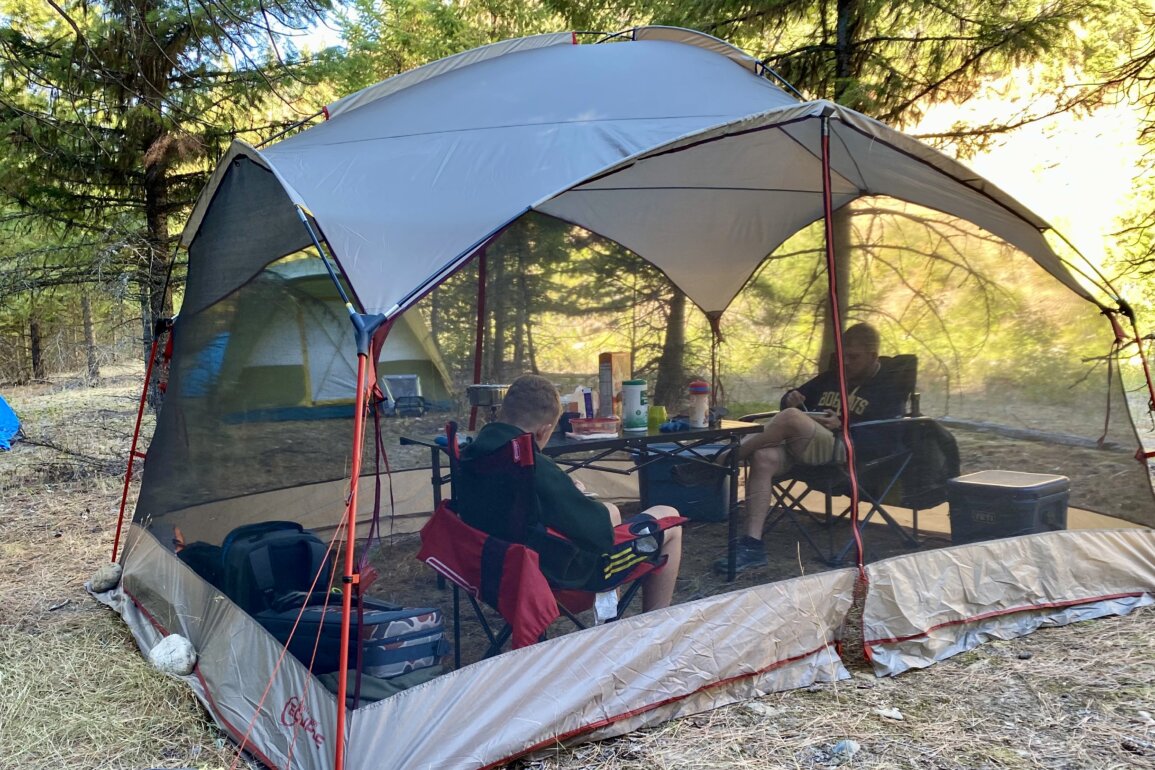
A great screen tent or pop up screen house can protect you from pesky insects, giving you a bug-free zone for enjoying outdoor meals or relaxing while camping or picnicking. If you’re trying to eat outside, hornets, yellow jackets and mosquitos can get into your food, sting, bite and generally freak people out.
If you’re with kids or anyone who doesn’t like bugs, screen tents are must-have gear. I almost always take a screen tent camping — just in case the bugs are bad — and I even took one on a 7-day whitewater rafting trip on the Salmon River in Idaho. As a life-long outdoor enthusiast and gear tester, I’ve set up, evaluated, and personally used more than 100 tents, shelters, sunshades, canopies, awnings, and tarp systems over the last decade.
The Coleman Instant Screenhouse is the best overall screen tent for most people. It sets up easily in less than a minute, has two zippered doors, and is relatively affordable.
The Bass Pro Shops Refuge 12 x 10 Screen House is the best screen tent under $100 because it’s longer than most in its budget-friendly price range, and it has a proven design that has lasted several years with two dozen uses without a break or fail.
The best pop-up screen tent is the Gazelle G6 6-Sided Screen Gazebo because it’s more stable than most yet includes vertical side walls that enhance living space. Gazelle also sells add-on wind panels and a waterproof ground footprint to help protect you from wet ground.
Table of Contents:
- Best Overall Screen Tent: Coleman Instant Screenhouse
↓ Jump to Review - Best Screen Tent Under $100: Bass Pro Shops Refuge 12 x 10 Screen House
↓ Jump to Review - Best Pop Up Screen Tent: Gazelle G6 6-Sided Screen Gazebo
↓ Jump to Review - Best Screen House for Camping: REI
↓ Jump to Review - Best Screened Canopy Tent: Coleman Back Home Screened Canopy Tent
↓ Jump to Review - Best Screen Tent for Rainy Days: Nemo Victory Screenhouse Camp Shelter
↓ Jump to Review - Best Screen House with Floor: Coleman 8×8 Skyshade Screendome
↓ Jump to Review - Best Screened Shelter for Sun, Wind & Warmth: Cabela’s Big Outdoorsman Hub Screen Shelter
↓ Jump to Review - How to Choose a Screen Shelter
- Screen House Tent & Screen Shelter FAQ
Best Screen Tents & Pop-Up Screen Houses for 2026
There is more to choosing a screen tent than just looking for mesh walls: Some screened shelters are better in the wind while others are better for the rain. The best screen tents are sized to fit over picnic tables. While pop up screen houses are fast to deploy, they are less packable and more bulky, taking up more space in a car or garage. Despite the larger packed size of pop up models, if you struggle with typical tents, choose an instant up screen house for easier setup.
Best Overall Screen Tent
Coleman Skylodge 10 x 10 Instant Screen Canopy Tent
Pros:
- Super fast setup
- Excellent price-to-value ratio
- Two doors
Cons:
- Sloped walls reduce headroom
- Bulky packed size
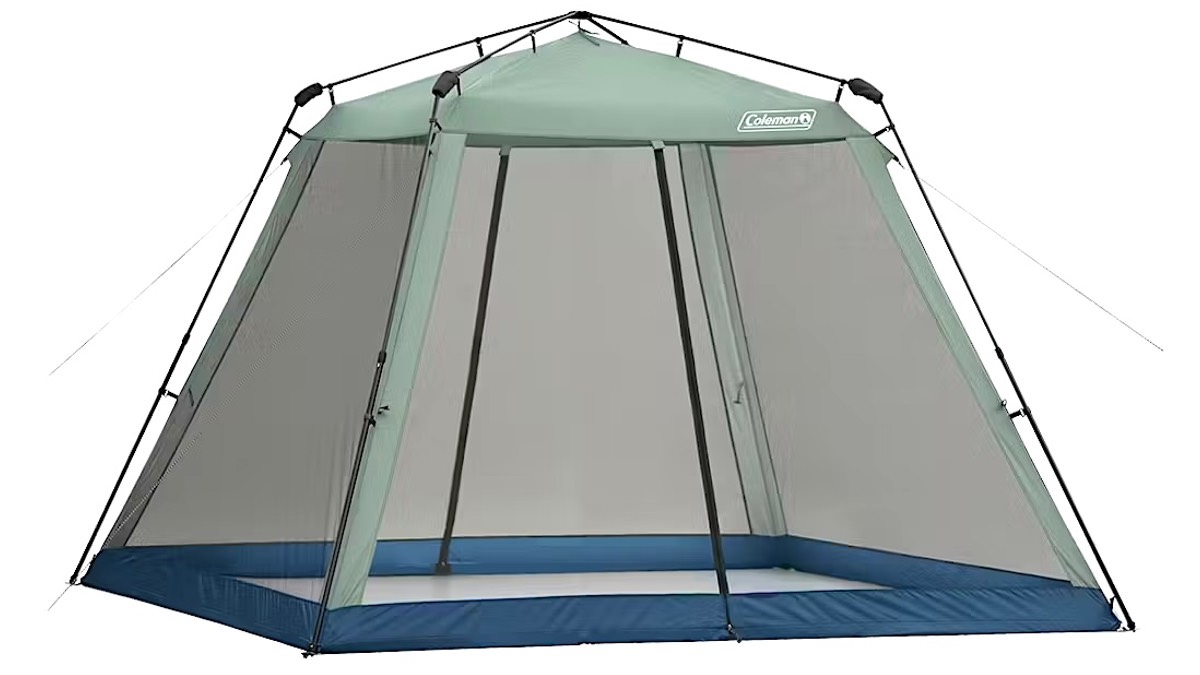
Bottom line: The Coleman Skylodge Instant Screen Tent is the best screen tent for most people because you can set it up in under a minute and the price is surprisingly affordable. The design has slightly sloped walls and legs, which helps with stability in wind or if the ground is slightly uneven.
Why I like it: While I don’t mind setting up typical tent-style shelters, I do appreciate the telescoping pre-attached poles. When I show up to a spot where the mosquitoes or no-see-ums are out in force, being able to quickly deploy a screen tent is almost like having a superpower.
The top is made from UVGuard material for sun protection and the guy lines come pre-attached. Coleman makes this screened shelter in two sizes: a 10′ x 10′ square (shown above) and a larger 15′ x 13′ hexagon option. I like the square for couples and small families but I recommend the hexagon for more elbow room.
Key Specifications:
Size: 10′ x 10′ or 15′ x 13′ hexagon
Peak height: 7′
Packed size: 49″ x 6.5″ or 52″ x 8″
Weight: 16.5 lbs or 18.25 lbs
Check buying options & shipping/availability at:
_________________________
Great alternative option: The CLAM Escape Pop-Up Screen Tent uses a sturdy hubbed wall design that also lets you set it up in under a minute. The walls are more vertical for improved headroom, but it costs more.
_________________________
Best Screen Tent Under $100
Bass Pro Shops Refuge 12 x 10 Screen House
Pros:
- Outstanding value
- Roomier rectangle for covering picnic tables
- Very packable & car-camping friendly
- Includes drop-down Wind Panel
Cons:
- Not as fast to setup as pop up options
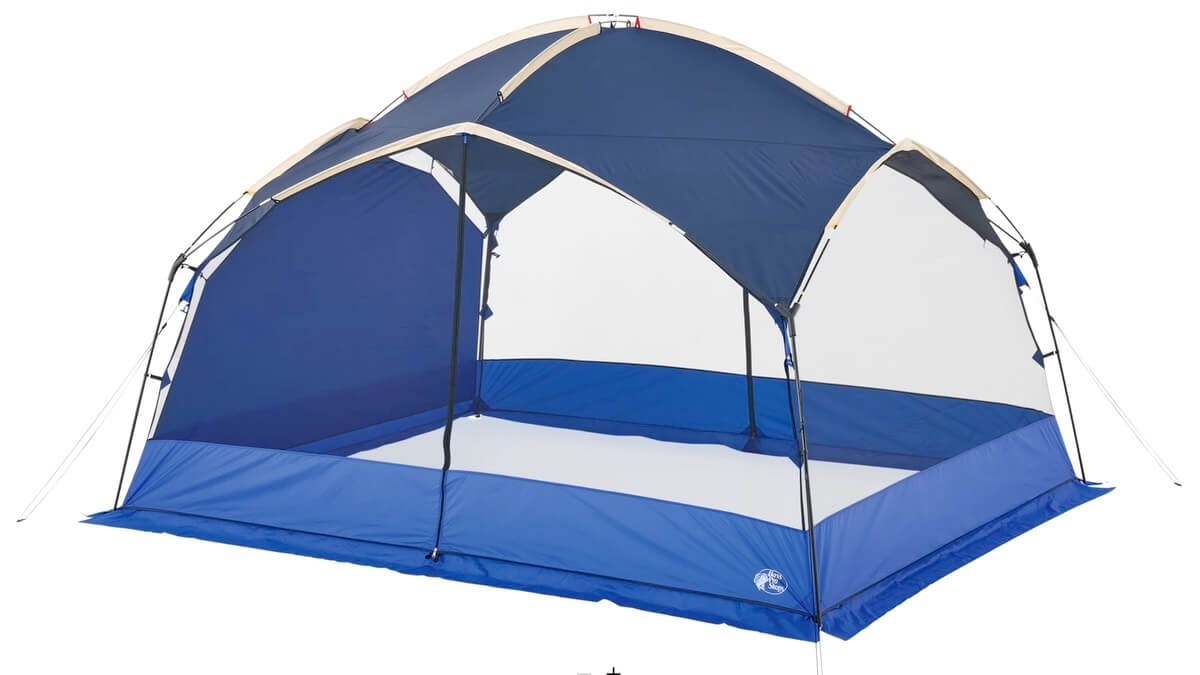
Bottom line: The newly updated Bass Pro Shops Refuge Screen House is easily the best screen tent under $100 because it’s two feet wider than most in its price range and includes a waterproof roof. As long as you’re willing to spend 5-10 minutes setting it up like a traditional tent, the value is hard to beat.
Why I like it: I took this packable screen house with me on my raft during a 100-mile friends and family whitewater river float trip down the Salmon River in Idaho. When one of our assigned riverside overnight camping spots was packed with yellow jackets, this screen tent provided a welcome hideaway from the fearsome little buggers. I like that it delivers a large 120-square-feet of protected space but packs down into a small carry bag.
It’s not the fastest to setup, but once you assemble it like a typical tent, it’s relatively sturdy and has tie-down points for wind. The roof is waterproof with a 800mm polyurethane coating, but rain can slide down near the corner poles and work its way through the mesh, so it’s not totally waterproof like a tent. While the mesh walls have gotten wet in the rain, picnic tables in the center have stayed dry.
I like the drop-down Wind Panel, which is nice when we need to block some wind or provide more shade. If you have someone in your family who struggles with mosquito bites or is allergic to hornets or bees, this is a handy shelter to have available.
Key Specifications:
Size: 10′ x 12′ rectangle
Peak height: 7’4″ or 7’9″
Packed size: 27″ x 8″ or 34″ x 12″
Weight: 16.1 lbs or 29.5 lbs
Check buying options & shipping/availability at:
_________________________
Great alternative: The Browning Basecamp Screenhouse has a very similar design but the polyurethane coating has a higher 1500mm waterproofing rating compared to the 800mm in the Bass Pro Shops model.
_________________________
Best Pop Up Screen Tent
Gazelle G6 6-Sided Screen Gazebo
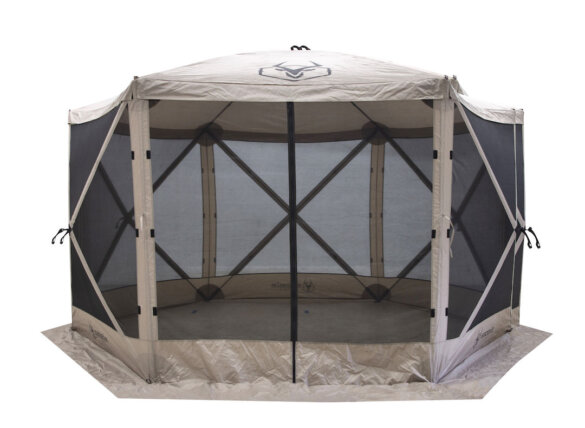 The rugged Gazelle G6 6-Sided Portable Gazebo uses a hubbed-panel design for easy setup and stability in wind.
Pros:
- Fast hubbed-wall setup
- Sturdy design
- Vertical walls offer more headroom
Cons:
- Packed size is quite long
- Bit heavy
- Only one door
Bottom line: The Gazelle G6 6-Sided Screen Gazebo is the best pop up screen tent because its hubbed design is durable and very sturdy. The vertical walls provide a bit more headroom than those that slope, providing enough room for up 8 people and a table. The biggest drawback is that it packs down into a long case that can be bulky for packing into small cars.
Why I like it: I like the stiff sidewalls with the hexagonal shape because it can handle wind better, particularly when you attach guy lines to the center of each wall. The material build quality is also much better than most cheap competitors. The design was originally created for overland camping in rough, undeveloped places. You get a 210-denier oxford weave polyester shell with a roof that is waterproof up to a 2,000 mm HH rating. Gazelle also gives you extra material and stitching around the corner joints for increased durability.
Gazelle also sells accessory sidewall wind panels for adding shade and blocking wind, plus a matching accessory 6-sided Gazebo Footprint, which is basically a fitted waterproof ground tarp to act as a floor. If you want an easy-to-deploy screen shelter that’s also great for wind, this Gazelle model is my favorite pick.
Key Specifications:
Size: 10’4″ x 10’4″ in a hexagon
Peak height: 7.’2″
Packed size: 8″ x 8″ or 73″
Weight: 34 lbs
Check buying options & shipping/availability at:
_________________________
Great alternative options: The Gazelle G6 Cool Top 6-Sided Portable Gazebo shares a similar hubbed wall design but goes all out with extras. The walls include attached roll-up shade and wind panels, and the top has a mesh ceiling with a removable waterproof rain fly. The biggest drawback is that this premium version costs more than twice as much. If you like this design but want more space, consider the rectangular Gazelle Tents Tandem Gazebo, which is 13-feet long.
_________________________
Best Screen House for Camping
Pros:
- Higher quality build than most
- Floor skirt makes doors zip better
- Packs down in a small carry bag
Cons:
- Must assemble like a typical tent
- Interior height not as tall as some
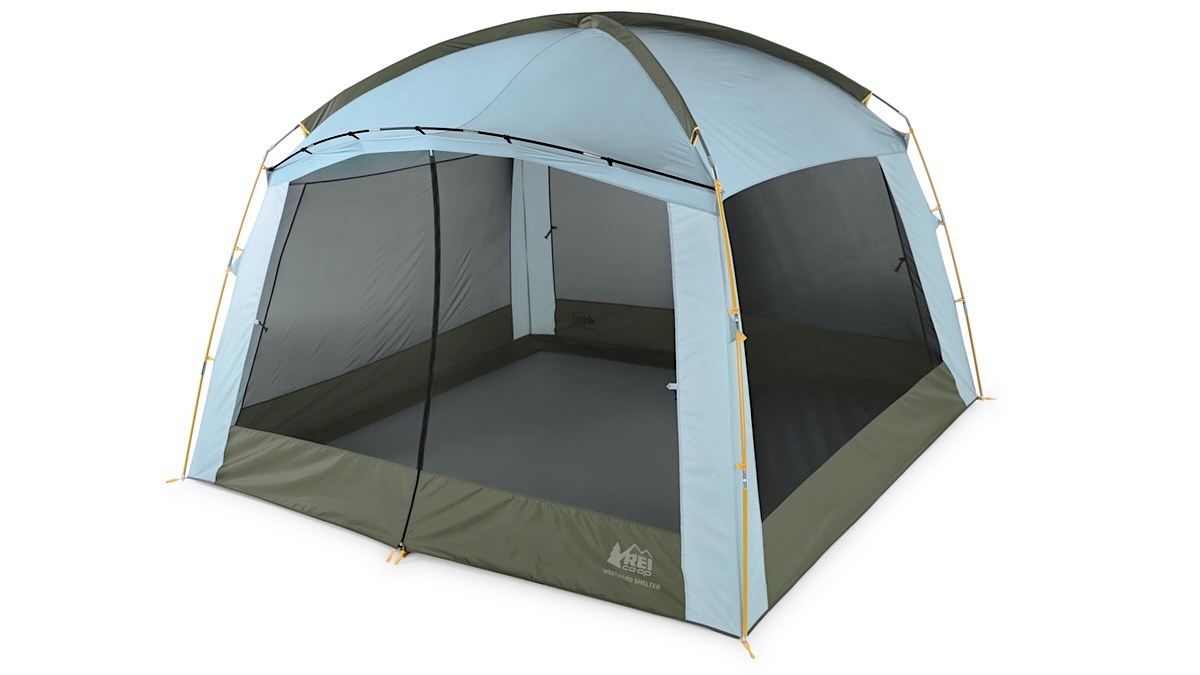
Bottom line: The REI Co-op Westward Shelter is the best screen tent for camping because it offers a superb blend of packability with a quality build that’s more likely to hold up when you need it most. The PFAS-free canopy fabric includes a DWR coating for shedding rain (but the mesh walls will leak, of course).
Why I like it: The fine mesh walls attach to polyester panels at all four corners, providing increased durability where the poles and guylines attach. Most cheaper models have less reinforcement in these areas, so I’m happy to see the forethought by REI here. Even though it has a tent-like setup process, it’s also a bit easier to set up than the Bass Pro Shops Refuge because the pole system is more intuitive.
The overlapping floor skirt not only discourages crawling bugs, it also maintains the perfect shape for the zippered doors to function in their optimal positions. This last one seems simple, but I’m a fan: The oversized stuff sack makes getting the Westwood Shelter back into its bag much easier than most. I like being able to pack up camp as quickly and easily as possible, so REI gets a thumbs up here from me.
Key Specifications:
Size: 10″ x 10″
Peak height: 7′
Packed size: 28″ x 9″ x 8″
Weight: 18 lbs 15 oz
Check buying options & shipping/availability at:
_________________________
Great alternative options: The L.L.Bean Woodlands Screen House shares a similar rugged build and overall design, but it uses stouter aluminum poles. The door is easier unzip and zip with one hand when you’re carrying a drink or plate, but it only has one door, unlike the Westwood Shelter, which has two. It’s also not quite as tall and costs more. Still, having a door that lets you zip and unzip with one hand is a nice feature.
_________________________
Best Screened Canopy Tent
Coleman Back Home Screen Canopy Tent
Pros:
- Roomy vertical design
- Pops up like sun-shade canopies
- Tall guy line attachment points improve wind resistance
Cons:
- Bulky carrying case
- Bit heavy
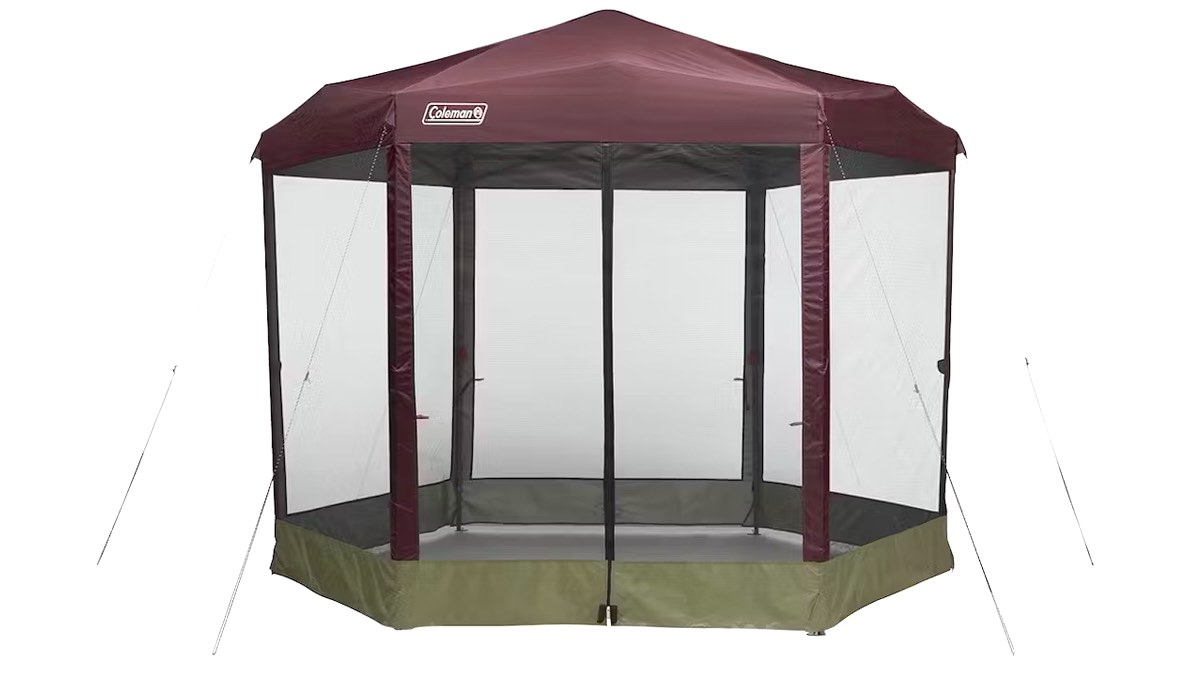
Bottom line: The Coleman Back Home Screen Canopy Tent with Instant Setup sets up near instantly with a frame design that is more like sun shade canopies than typical tents. The pole structure is on the inside rather than the outside, making this model appear more at home in your backyard as a portable gazebo vs a camping tent.
Why I like it: The interior structure provides a clean look on the outside and reduces stress on the mesh walls. As a taller guy, I really like the tall interior ceiling and verticality the walls provide. The steel structure almost magically folds down into a packable design, but it’s still a bit large for car camping from smaller vehicles. I tend to like this design most for backyard barbecues, parties, and picnics, but if you have the space to pack this bad boy with you, don’t let me stop you.
Key Specifications:
Size: 10′ 8″ x 9′ 2″ hexagon
Peak height: 9′
Packed size: 47″ x 13″
Weight: 48.7 lbs
Check buying options & shipping/availability at:
_________________________
Great alternative options: If you like the general design but want more space, check out the Coleman Back Home 15 x 13 Screen Canopy Tent. It costs a bit more but the larger dimensions nearly doubles the usable amount of shade coverage and feeling of roominess.
_________________________
Best Screen Tent for Rainy Days
Pros:
- Channels rain away from doors and walls
- Lightweight and packable
- Can zip/unzip doors one-handed with step-pad feature
Cons:
- Bit spendy
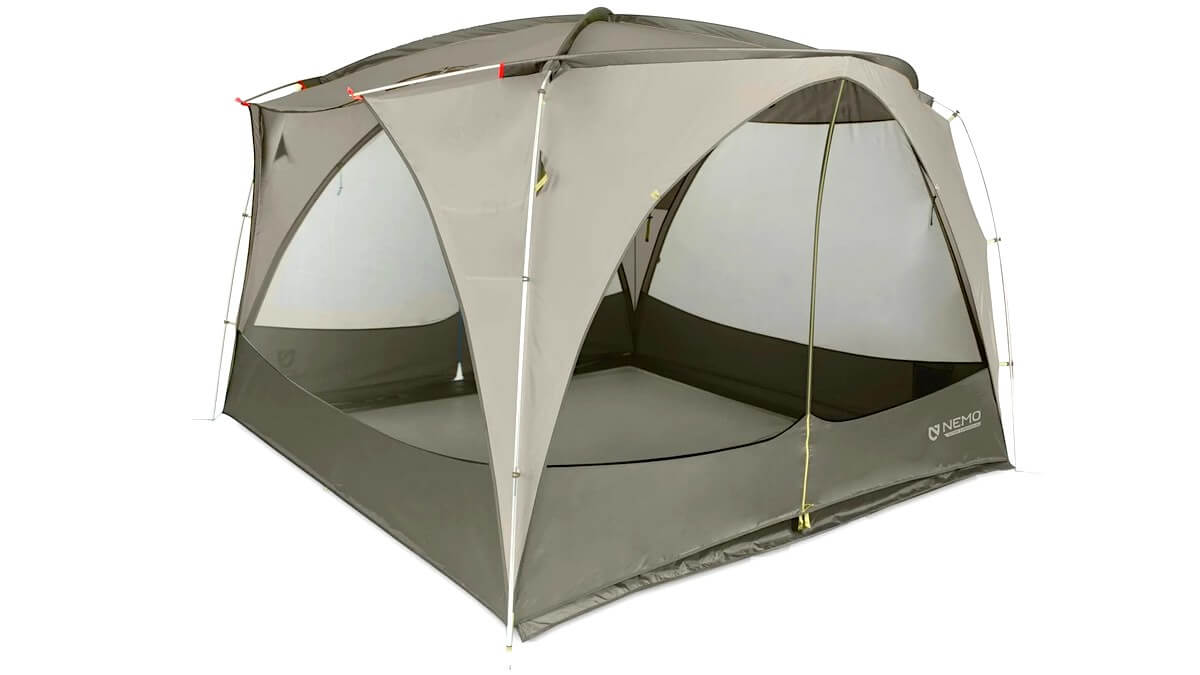
Bottom line: The NEMO Victory Screenhouse is the best screen tent for rain because it has a waterproof canopy with built-in rain gutters that channel rainwater away from the door and mesh walls.
Why I like it: NEMO has a unique design that tackles the issue of rain, making this screen tent more versatile than most of the competition. It’s also sturdy, lightweight, and very packable. The only drawback is the premium price point. If you face frequent rain, it can become a great place to hide out and play cards or games until the rain stops.
Key Specifications:
Size: 10′ x 10′
Peak height: 7’1″
Packed size: 27″ x 10″ x 10″
Weight: 16 lbs
Check buying options & shipping/availability at:
_________________________
Great alternative: If you’re expecting, or just want to prepare for, rain with cool, windy weather, consider the Gazelle G6 Cool Top 6-Sided Portable Gazebo. It features a separate rainfly that extends over the sidewalls, plus it has roll-down wind walls that block wind and provide extra shade.
_________________________
Best Screen House with Floor
Coleman Skyshade Screen Dome Canopy
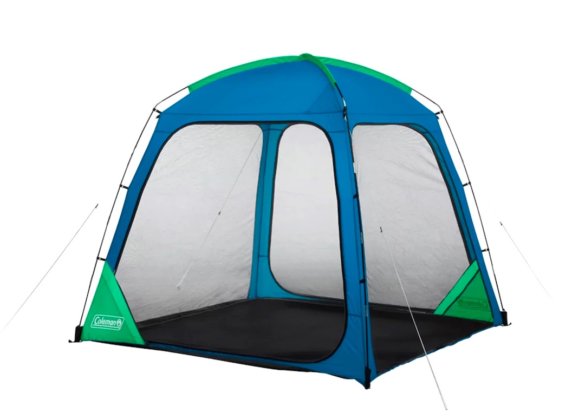 The Coleman Skyshade 8×8 Screen Dome Canopy comes with a handy removable floor.
Pros:
- Includes detachable floor tarp
- Simple x-pole setup
- Small packed size
Cons:
- Smaller size (8′ x 8′)
Bottom line: The Coleman Skyshade Screen Dome Canopy includes a removable floor, which is a rare screen tent feature these days. The floor doesn’t seal out everything like typical tent floors, but it can help keep your feet, chairs, coolers, and camping or lounging gear dry.
Why I like it: While I often don’t see a need for a floor (particularly if I’m covering a picnic table) I appreciate having a floor when the ground is wet or muddy. In addition, floors are handy for parents of small children who may play or sit on the floor. I’m an outdoor guy, so I don’t worry much about dirt, but still, sometimes a floor can reduce stress for parents trying to feed an active family.
I also like the portability of this screen tent because it doesn’t take up much space in any car. If you’ve ever tried to have a picnic in a park or have gone to an outdoor event that has hungry yellow jackets swarming the hot dogs, the Skyshade Screen Dome Canopy can provide a quick, safe haven.
Important note: Coleman makes a 10′ x 10′ version of the Skyshade, but the 10′ x 10 version does not come with a removable floor. If you want to use the Coleman Skyshade over a picnic table, choose the Skyshade 10×10 Screen Dome Canopy for the improved elbow room, just remember that the big version doesn’t come with a floor.
Key Specifications:
Size: 8′ x 8′ or 10′ x 10′
Peak height: 6’8″ or 7’2″
Packed size: 26″ x 8″ or 26″ x 9″
Weight: 11.4 lbs or 13.4 lbs
Check buying options & shipping/availability at:
_________________________
Alternatives: Beware the cheap pop-up options you might find for sale these days. I’m not a fan of gear that is likely to quickly tear or fail and end up in a landfill. The Gazelle G6 6-Sided Screen Gazebo doesn’t automatically come with a floor, but you can buy a perfectly fitted floor as an accessory. The Gazelle has a great build quality that makes the increased cost worth it as long as you’re not on the tightest of budgets. Of course, if you’re not worried about a perfect fit, you can get very close with a good inexpensive heavy-duty tarp that matches the general footprint of your screen house. For a heavy-duty option, consider a burly canvas tarp.
_________________________
Best Screened Shelter for Sun, Wind & Warmth
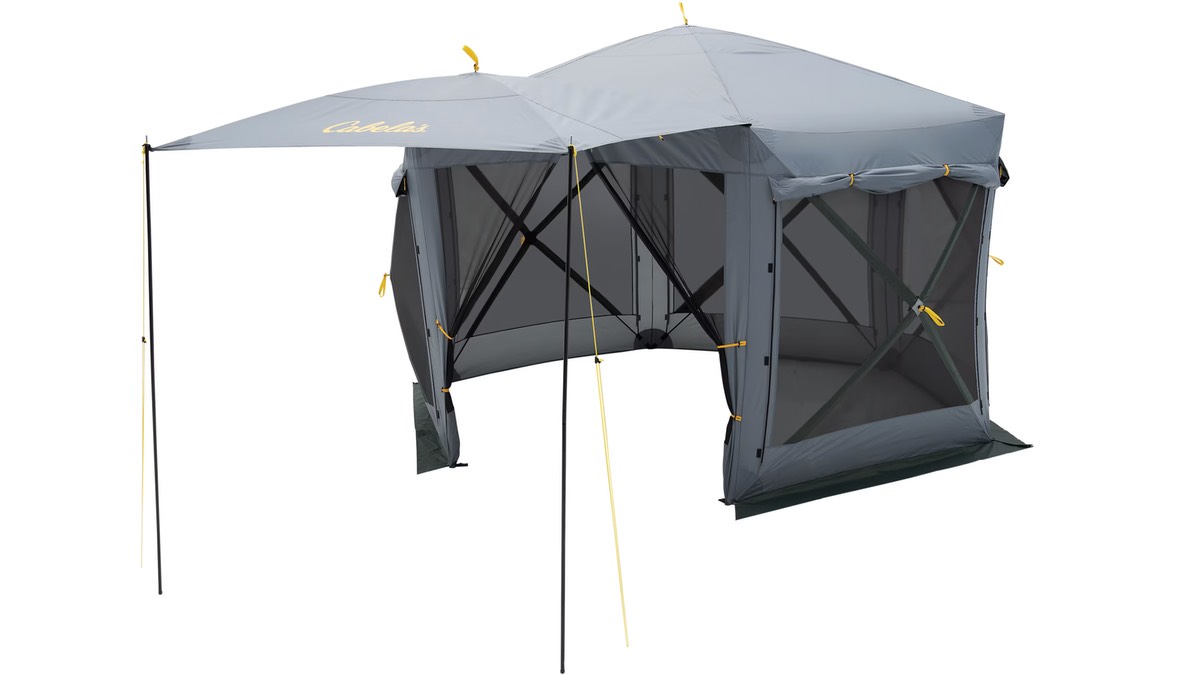
Cabela’s Big Outdoorsman Hub Screen Shelter
Pros:
- Outstanding, versatile weather protection
- Goes up fast despite the size
- Hub system is stable
Cons:
- Long, bulky storage size
- Heavy
Bottom line: The Cabela’s Big Outdoorsman Hub Screen Shelter is the best screen house for protecting you from the elements in addition to pesky insects like mosquitoes, no-see-ums, and black flies. The x-shaped side walls easily pop-up to provide a stable perimeter, and roll-up side panels can drop down to add shade and block wind.
Why I like it: I’m a fan of the Cabela’s Big Outdoorsman series because it delivers quality, rugged gear at generally affordable prices. Once up, this 13′ x 11′ screen shelter is roomy enough for a family with a table inside. I like the tall 8′ height, plus the sheer versatility of the design is a winner.
The attached side panels make it easy to use them to block wind or add more shade. I also appreciate the front awning, which provides a welcoming vibe and extra shade. The walls and roof are made from a rugged 210-denier polyester with a waterproof 800mm polyurethane coating, so it can shed rain. It’s not as weather proof as a real tent, but it’s much better than most screen shelters.
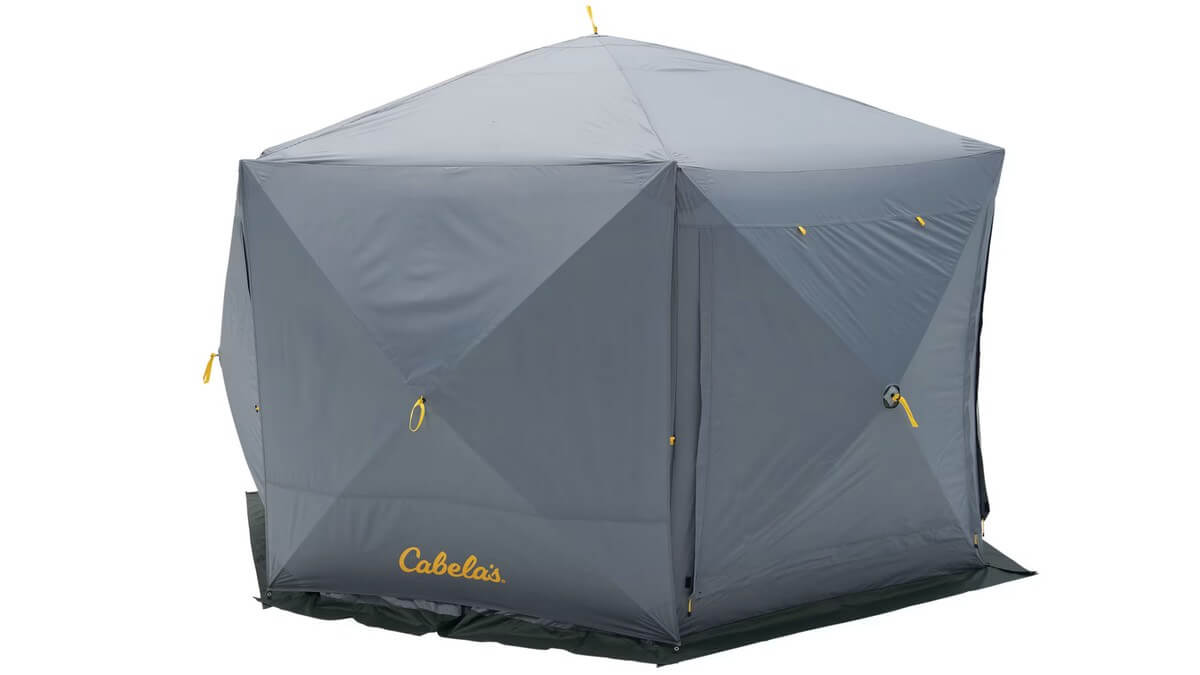
I also like that you can drop the side walls and close the awning to button up the entire screen tent for extra privacy. If you need a place to change clothes, this is handy. If you’re leaving a camp site to go for a hike or play at a beach, you could stash gear inside out of sight.
Key Specifications:
Size: 13.4′ x 11.3′ hexagon
Peak height: 8′
Packed size: 83″ x 11″ x 11″
Weight: 49 lbs
Check buying options & shipping/availability at:
_________________________
Great alternative: The Gazelle G6 Cool Top 6-Sided Portable Gazebo has a similar design that’s better with rain. Instead of a roof, it has a more traditional rain fly that has a stronger waterproof rating. Like the Big Outdoorsman Hub Screen Shelter, you still get roll-down wind and shade panels, but the Gazelle version includes windows that let you manage air flow better. Plus, it has two doors. The biggest drawback is that it costs twice as much, but we can’t argue with the quality and thoughtful set of features.
_________________________
Extra Long Screen Tent
Bushnell 14 x 10 Screen House
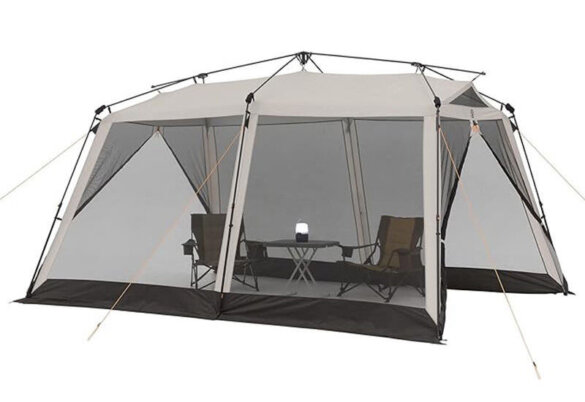 The Bushnell 14′ x 10′ Screenhouse is one of the largest available rectangular pop-up screen tents for 2026.
The new Bushnell 14′ x 10′ Screen House is a large and affordable pop-up screen tent. Bushnell says you can setup this screen house in about 60 seconds — but I recommend you go a little slower and use a buddy. Why? In my experience, bigger pop-up screen tents place more torque on the joints. By going slower, you can make sure you get the angles oriented correctly on the way up — and avoid bending or breaking components. The long ends feature extended eaves for more airflow and improved headroom. You also get two doors and extra ground skirts to help seal the bottom over uneven ground. Of course, this rectangular Bushnell Screen House easily fits over picnic tables with room to spare.
Key Specifications:
Size: 14′ x 10′
Peak height: 7′
Packed size: 48″ x 14″
Weight: 28.5 lbs
_________________________
Extra Small Personal Screen Tent
CLAM Traveler Screen Tent

The CLAM Traveler Screen Tent is one of the smallest pop-up screen shelters I recommend. It’s not as packable as our screen tents in the next section below — but it’s pretty close. If you’re an RVer looking for a quick and easy screen tent and appreciate the CLAM Quick-Set pop-up system, the Traveler might be right for you. At just 6′ x 6′, it’s perfect for two people with a small table. Still, you could fit four people in it in a pinch.
Key Specifications:
Size: 6′ x 6′
Peak height: 6’10”
Packed size: 53″ x 7″ x 7″
Weight: 20 lbs
_________________________
How to Choose a Screen Shelter
There are several key factors to consider when you’re choosing a screen shelter: The size when set up is critical, as is the size when packed for travel or storage. The type of setup might be important to you, too, as well as the cost. Finally, specialized features for extra wind, rain, and shade protection might make your shelter even more useful and versatile. Let’s take a closer look:
Size of coverage
The most common screen tent size is 10′ x 10′. This size can easily fit over picnic tables at campsites or parks, and it generally provides plenty of room for 4-6 people, though we’ve squeezed 8 into this space, too. Longer options like 10′ x 12′ give you a bit more room to maneuver around tables, but the bigger size can sometimes make them harder to fit into campsite spots or manage on uneven ground.
Pay close attention to the peak height and the slope of the walls. Some screen shelters have low ceilings, while others have sloped walls that reduce headroom along the edges. If your family has a lot of tall and large bodies, error toward taller screen houses with vertical sidewalls.
Setup method and packed size
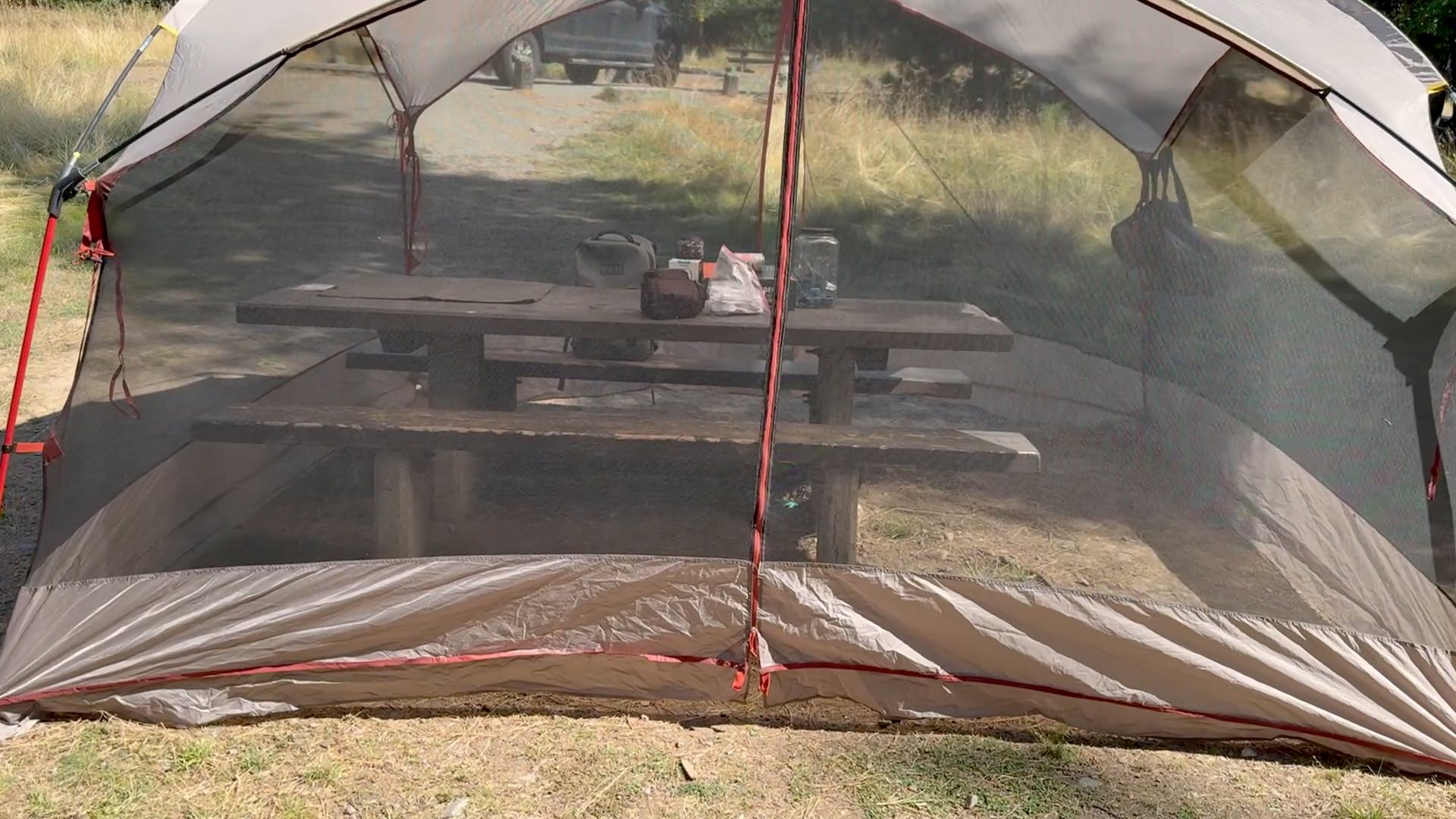
When it comes to screen houses, the setup method directly affects the packed size: Easy-up, pop-up, hub, or instant-up screen houses use connected, collapsible frame systems that are long bulky. The benefit of easy-up designs is that you can setup a screen house in under a minute. The drawback is that their packed sizes typically range of four-to-seven feet long.
Stand screen shelters that assembly like typical camping tents use couple dozen or so small poles that you must connect together to create longer poles that support the roof and mesh walls. Assembly is generally slower, ranging from 5-10 minutes, but the packed size is easy to stow in most any car.
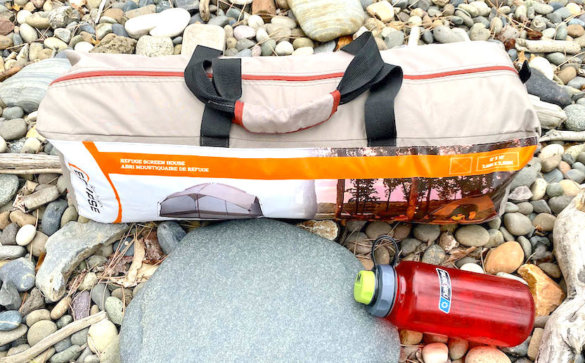 The biggest benefit to lightweight screen houses is the travel-friendly size.
Cost & your budget
You can get a very good screen tent in the $100-150 price range, but these shelters won’t be as rugged as those that cost twice as much. If you’re using them several times a season, they’ll likely last multiple seasons without fail. However, if you’re using them quite a lot, particularly if you leave them out in the sun all summer long, the sun’s UV rays will break down the materials leading to quicker failures. Premium models tend to include better UV protective coatings and stronger materials.
I recommend that you spend according to your budget, keeping in mind that an infestation of flying insects can ruin an outdoor adventure. For me personally, this means that I often pack an affordable, portable screen tent with me as just-in-case insurance. I have a friend who had a young daughter who was stung multiple times one summer by several aggressive wasps, and she was terrified of anything bee-like for the rest of the summer. On one outing, I set up my screen tent primarily for her, and it saved the day.
Are you worried about rain or wind?
While screen tents are purchased primarily for protection from insects, the most versatile models also provide shade and can shed rain and block wind. The best screen shelters for rain have a fully waterproof roof or rainfly that can handle extended rain or drizzle. While most screen houses have water-resistant roof materials, they don’t always have shapes that shed rain away from slightly sloped mesh walls. If you only get one camping trip per year, investing in a rain-ready screen tent can make all the difference while you wait out a rain storm.
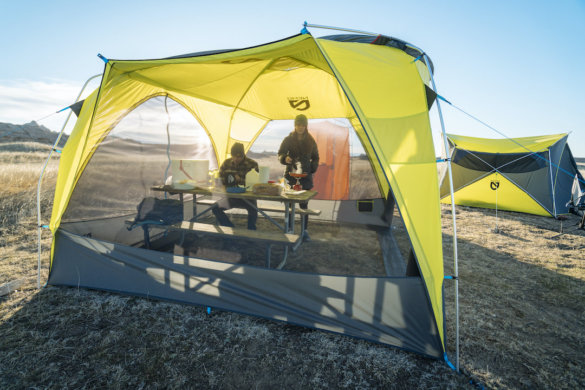 The Nemo Victory Screenhouse does a great job of shedding rain, too.
Tips for Using Screen Tents on Windy Days
The best screen shelters for wind include many tie-down options and stake loops. Next, the best screen houses for wind should have sturdy pole structures and quality materials. However, even if you start with a quality design, you will likely need to supplement your screen house by adding extra stout stakes and possibly extra tent guyline cord to better secure your shelter against gusty winds. Finally, you’ll want to position your screen shelter so winds are more likely to hit a corner of the shelter and flow around rather hit a sidewall straight on.
If wind is a problem, we recommend that you choose a screen shelter with many guy line tie-down points and then buy the extra stakes, including a couple Orange Screw Ground Anchors, which are great for sandy or loose soils (and made it into our guide to the best gifts for campers). In addition, screen houses with extra material along the bottom let you place heavy coolers or rocks on top of the base fabric to help stabilize the shelter in windy conditions.
Screen House Tent & Screen Shelter FAQ
What is a screen tent?
A screen tent or screen house is a tent-like structure with mesh walls and a solid fabric roof for shade and rain protection. The best screen houses, screen shelters, and screen tents are great for camping and picnics when you want a place to eat or visit ‘outside’ — but also want protection from pesky insects.
What is a screen house used for?
Screen houses are great for camping and picnicking when you want a space to eat or hang out away from insects, sun or rain. Outdoor enthusiasts like to take screen houses camping so they have a protected space for eating, playing games, and visiting. They’re particularly great for family camping. Many screen tent shelters have two doors and are sized large enough to place over standard size picnic tables.
Are screen tents waterproof?
By design most screen tents are highly water-resistant but not fully waterproof in stormy conditions. More specifically, most screen house tents have water-resistant roof fabrics that can shed light rain. However, some screen shelter roof designs let rain water pour over the roof and down the mesh tent walls, which could let water inside the shelter. The best screen shelters include fully waterproof roofs as well as roof and wall designs that keep water outside of the shelter. Even so, screen shelters with roll-down walls are susceptible to wind-driven rain. Because screen shelters that come with floor kits don’t have fully-sealed ‘bathtub’ style waterproof floors like true camping tents, some water can get underneath the walls.
Can you sleep in a screen tent?
Yes! In good weather situations, you can easily sleep inside of a screen tent. However, screen tent shelters don’t have fully-sealed floors and walls, so it’s possible that some insects or rainwater could get inside the screen tent. If you plan to sleep in your screen tent, we recommend that you use camping cots to ensure that your bedding won’t get wet in rainy conditions.
What is no-see-um mesh?
No-see-um mesh is simply a mesh screen with holes that are too small to let tiny flying midges, commonly called “no-see-ums,” from passing through the mesh. For comparison, no-see-ums are much smaller than mosquitoes (and sometimes difficult to see). There are thousands of species and many of them bite. The best screen tent shelters have mesh screens that prevent no-see-ums from entry.
Why Trust Man Makes Fire?
As a lifelong outdoor enthusiast, Chris Maxcer has been setting up and using camping tents, backpacking tents, canopies, screen shelters, and tarps for decades. In addition to personal uses, he’s tested and reviewed more than 50 outdoor shelters since 2015, taking them out into the wild to evaluate them in action with friends and family. He carried ultralight mosquito netting into the mountains of central Idaho while backpacking, took shelters on wilderness whitewater rafting trips, and he is the go-to guy for setting up screen tents and shade systems for all camping trips and all-day beach outings. He’s also been known to set up canopy shelters off the rear of his pickup truck in the parking lots of Idaho ski resorts for tailgating in between runs and after long days on the mountain.
Man Makes Fire has published unbiased outdoor gear reviews since 2011.
